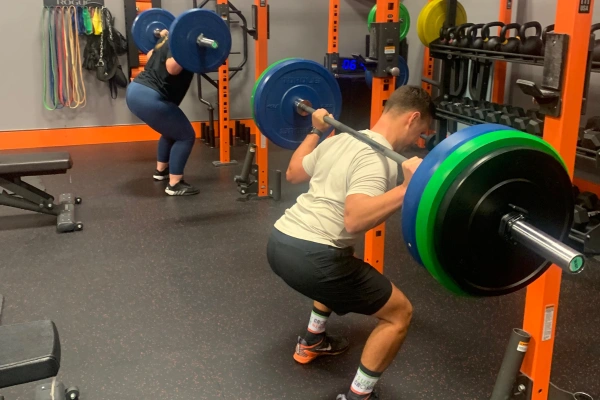

Most people think about lower body training too simply. Everything gets lumped into one category called "leg day," as if every squat, deadlift, lunge and step-up accomplishes the same thing. In reality, that's about as accurate as saying every upper body exercise is just an arm workout.
If you've trained at AIM Athletic for any length of time, you've probably noticed that many of the same exercises show up throughout our small group training, personal training, and hockey training programs. That's intentional. We aren't constantly chasing new exercises just to keep things interesting. Instead, we repeat movement patterns, change the exercise order, adjust the rep ranges, and manipulate the training stimulus so you continue making progress while becoming more efficient at the movements themselves. After all, your nervous system learns through repetition, not randomness. The goal isn't to perform a hundred different exercises. The goal is to become exceptionally good at the ones that matter.
With the upper body, most people naturally understand the idea of pushing and pulling movements. Bench press? That's a push. Pull-ups? That's a pull. Shoulder press? Push. Row? Pull. Different movement patterns challenge different muscles, and balancing them is one of the easiest ways to build strength while keeping your shoulders healthy.
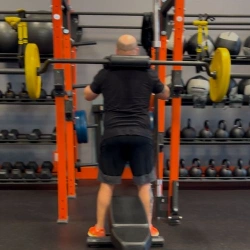
The lower body, however, rarely gets discussed the same way. Most coaches divide lower body exercises into squatting and hinging patterns because almost every exercise falls somewhere along that continuum. I like taking it one step further and thinking about lower body pushes and pulls. Before another strength coach jumps into my inbox to remind me that biomechanics are more complicated than that, yes, I know they are. Force vectors, joint angles, and muscle actions all influence how an exercise behaves. But as a practical way of understanding movement, it's an incredibly useful framework. Generally speaking, exercises that are more quad dominant behave like lower body pushes, while movements dominated by the glutes and hamstrings behave more like lower body pulls.
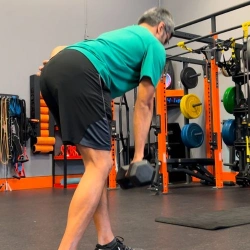
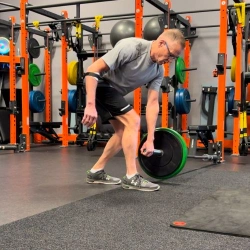
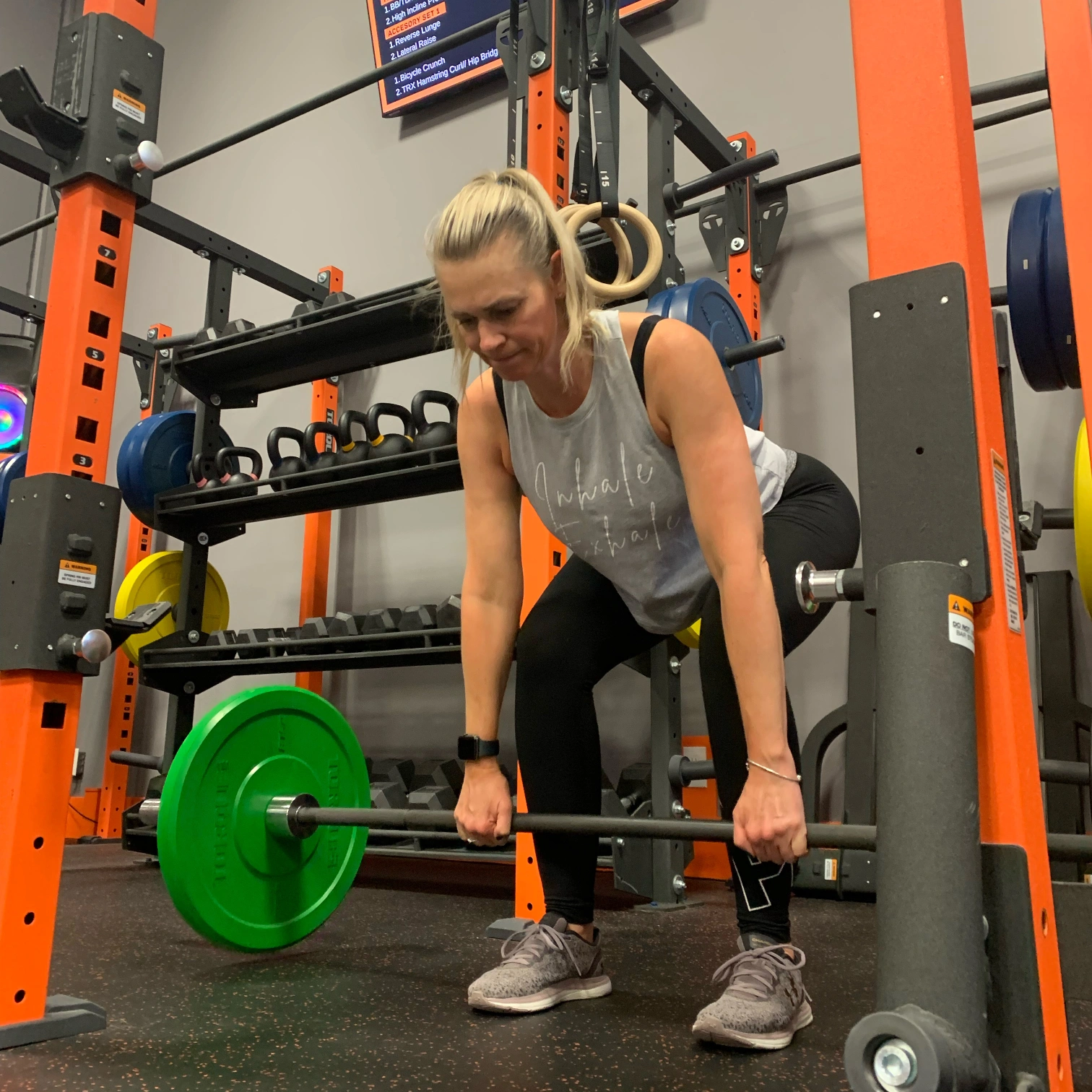
The interesting part is that exercise names don't necessarily tell you where they belong. Take the trap bar deadlift and the conventional deadlift. On paper they're both deadlifts, but that's a little like comparing a German Shepherd and a Chihuahua. Technically they're both canines, but let's be honest, one is a dog and the other isn't. The same thing happens with these exercises. A conventional deadlift requires much greater hip flexion, placing the majority of the workload on the glutes and hamstrings as you pull yourself back to standing. A trap bar deadlift shifts the load closer to your centre of mass, allows you to stay more upright, increases knee flexion, and asks considerably more from the quadriceps. Despite both being called deadlifts, one behaves much more like a lower body pull while the other behaves much more like a push.
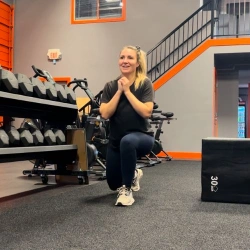
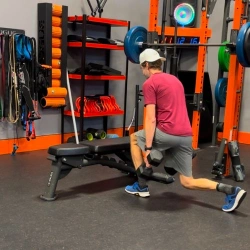
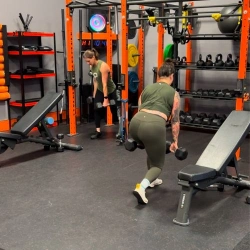
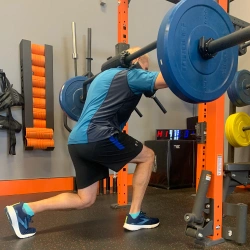
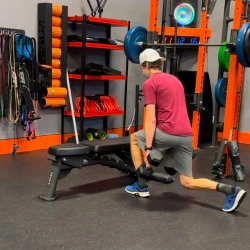
Lunges tell a similar story. A forward lunge generally creates greater knee flexion, making the quadriceps the primary driver of the movement. Switch to a reverse lunge and the front shin stays more vertical, the hips contribute more, and you're driving through your heel to pull yourself back to standing using the glutes and hamstrings. Same exercise family, completely different muscular strategy. It's a perfect example of why an exercise name doesn't always tell you what it's actually training.
Even pulling movements can be divided further. Your hamstrings cross both the hip and the knee, meaning they can extend the hip or flex the knee depending on the exercise. During a Romanian deadlift, the knees stay relatively fixed while the hips move, making it a hip-dominant pull. During a leg curl, the hips stay still while the knees flex, making it a knee-dominant pull. Both strengthen the hamstrings, but they train different functions of the muscle. At the end of the day, the body doesn't know what exercise you're doing, it can only sense joint positions as well as stretch and tension created in the muscles.
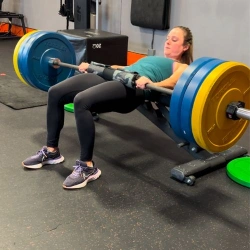
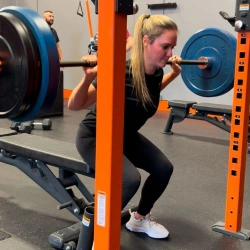
So why does any of this matter? Because this is where good programming separates itself from randomly collecting exercises. It's surprisingly common to see someone build an entire workout around squats, leg press, split squats and step-ups. Every exercise has a different name, but they're all emphasizing similar movement patterns. On the opposite end, someone might perform Romanian deadlifts, reverse lunges, hip thrusts and back extensions in the same workout. Again, different exercises, but they're asking many of the same muscles to do most of the work. A balanced lower body program isn't about constantly finding new exercises. It's about exposing your body to different movement patterns and muscular demands so no one joint or muscle group is doing all the work week after week.
This is exactly how we approach programming at AIM Athletic. Whether I'm writing one of our small group training programs for someone looking to build strength and improve their overall fitness, a personal training program focused on a specific goal, an ICBC active rehab program helping someone regain strength and movement following a motor vehicle accident, a youth strength training program teaching young athletes how to move safely and efficiently, or one of our elite hockey training programs preparing athletes for the upcoming season, the thought process is always the same.
I'm not just asking, "What leg exercises should we do today?" I'm asking which movement patterns we've already trained and which ones still need attention. For most of our programs, one lower body session begins with a bilateral quad-dominant movement followed by a unilateral hip-dominant exercise, while the second session reverses the emphasis with a bilateral hip-dominant movement followed by a unilateral quad-dominant exercise. By the end of the week we've challenged both hips and knees, trained both lower body pushing and pulling patterns, and developed strength on one leg as well as two. Whether you're recovering from an injury, training for hockey season, or simply trying to stay healthy and strong for everyday life, the principles behind the programming don't change.
The next time you hear someone say they're doing "leg day," remember that it doesn't actually tell you very much. A well-designed lower body program isn't just a random collection of squats, deadlifts and lunges. It's built around understanding how each exercise loads the body, which muscles are producing the movement, and how those movement patterns fit together over the course of a training week. That's why our programming looks the way it does at AIM Athletic. There may be a little more science behind your workout than you realized... although unfortunately, that doesn't make Bulgarian split squats burn any less.
You've got the info, now it's time to take AIM!

.webp)



.webp)

.png)




.webp)