
Another topic I'm revisiting since I've had some questions from our members about it recently, but you've spent enough time around a gym, you've probably heard some version of the argument that free weights are better than machines. Usually the conversation goes free weights require more stability, while also allowing your body to move more naturally and probably the most common argument of all, they're more "functional." Machines on the other hand have traditionally been pushed more toward the bodybuilding side of the fitness industry, where the goal is often to isolate a muscle and create as much tension as possible. While free weights, have become staples in strength and conditioning and functional training facilities. Like most debates in the fitness industry, we've somehow taken two perfectly useful training tools and decided that we need to pick a winner.
The reality is that are advantages and disadvantages to both. Free weights give us an incredible amount of freedom when it comes to exercise selection and allow the body to move relatively freely through space, but that also means the person performing the exercise is responsible for creating much more of their own stability. Machines generally do the opposite. They provide external support and often guide us through a predetermined movement path, which means less effort needs to be dedicated to controlling the movement and more can potentially be directed toward producing force. That additional stability is often viewed as a negative, but depending on the goal of the exercise or athlete, it may actually be exactly what we're looking for.
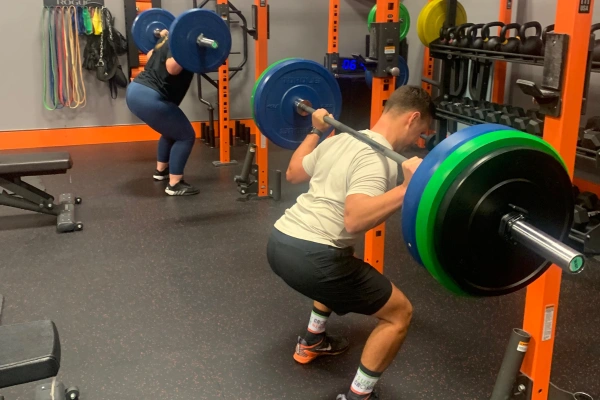
This brings us to one of my favourite fitness industry words, "functional." Functional training sounds great because, by default, anything that isn't functional must be... dysfunctional? The problem is that there isn't one universal definition of what makes an exercise functional. Take a leg press as an example. During a leg press we're flexing and extending the knees and hips against resistance. Those are quite literally the functions of those joints. Is a leg press an exact representation of something you do during your day or while playing a sport? Probably not, but neither is putting a barbell on your back and squatting with it. An exercise doesn't have to perfectly replicate an activity for the strength developed from that exercise to be useful.
This is also where the idea that free weights are simply "better" starts to fall apart. They might be better in certain contexts, but for some people they may actually be less effective for the specific adaptation or change we're trying to create. If we're trying to build muscle, for example, we need to provide enough mechanical tension to challenge the muscle and progressively give it to more work over time. Imagine someone who doesn't have the mobility, stability or experience to perform a squat very well. They may be limited by their balance, technique or available range of motion long before their legs are actually exposed to the amount of work they're capable of handling. Put that same person into a leg press where the machine provides more stability and now they may be able to work through a greater range of motion and put considerably more tension through the muscles we're actually trying to train. If building muscle is the goal, it's pretty difficult to argue that the exercise producing less muscular output is automatically better simply because it's performed with a free weight.
The key thing that I like to remind people about, is that not all output is created equally and every person is going to have different needs. Take two athletes like a tennis player and an NFL offensive lineman. A tennis player spends most of their match accelerating, decelerating, rotating and producing force with very little external support. Their ability to create internal stability through their trunk, hips and lower body while transferring force is incredibly important. Compare that to a 300 lb offensive lineman whose job involves planting both feet into the ground and trying to move another 300 lb human being who is actively trying to do the exact same thing to them. Both athletes obviously need strength and stability, but the importance of those qualities is different. There may be exercises where I want the tennis player responsible for creating more of their own stability, while with the lineman I may intentionally provide additional external support because I want them to focus almost entirely on producing as much force as humanly possible. Neither approach is more "functional" without first defining the function we're actually trying to improve.
We can take this idea in the opposite direction as well. Somewhere along the way, functional training became associated with making exercises increasingly unstable. If standing while pressing is good, standing on one leg must be better. If that's good, then standing on a BOSU ball while holding dumbbells is the pinnacle of human performance. The problem is that as we increase instability, our ability to produce force generally decreases. That's not necessarily a problem if balance or stability is the quality we're trying to train, but it becomes a pretty significant problem if we're trying to develop strength. Instead of trying to turn every strength exercise into a balance exercise, we're often better off keeping the two qualities separate. Use stable positions when the goal is maximizing force production and challenge balance when balance is actually the goal. As a wise-man once said, let the main thing be the main thing.
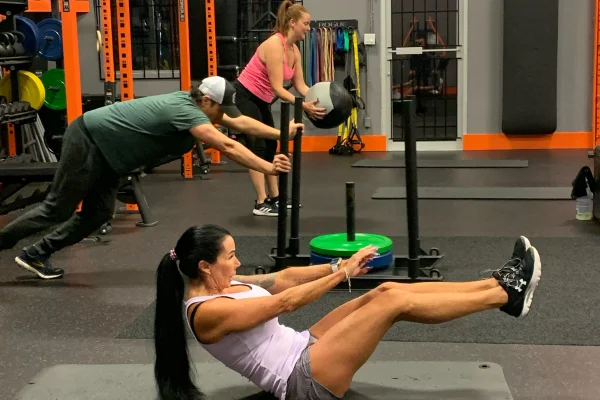
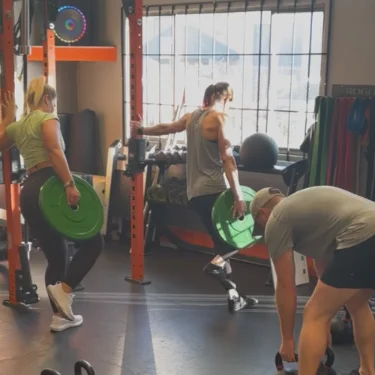
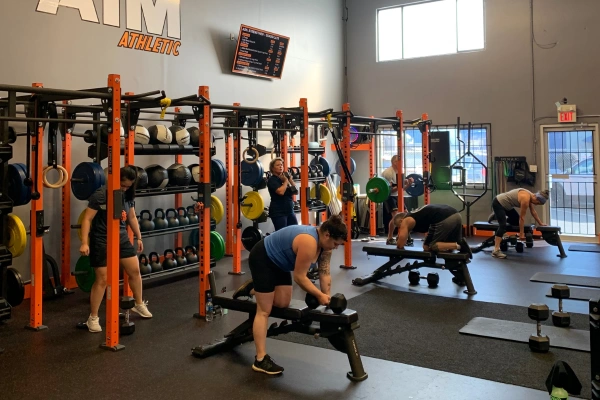
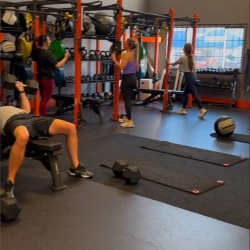
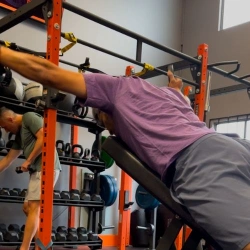
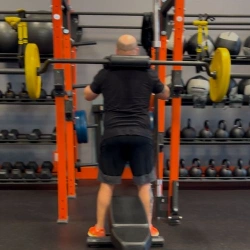
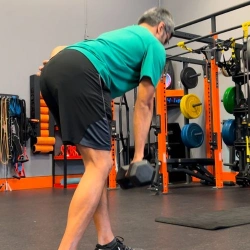
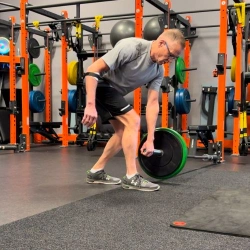
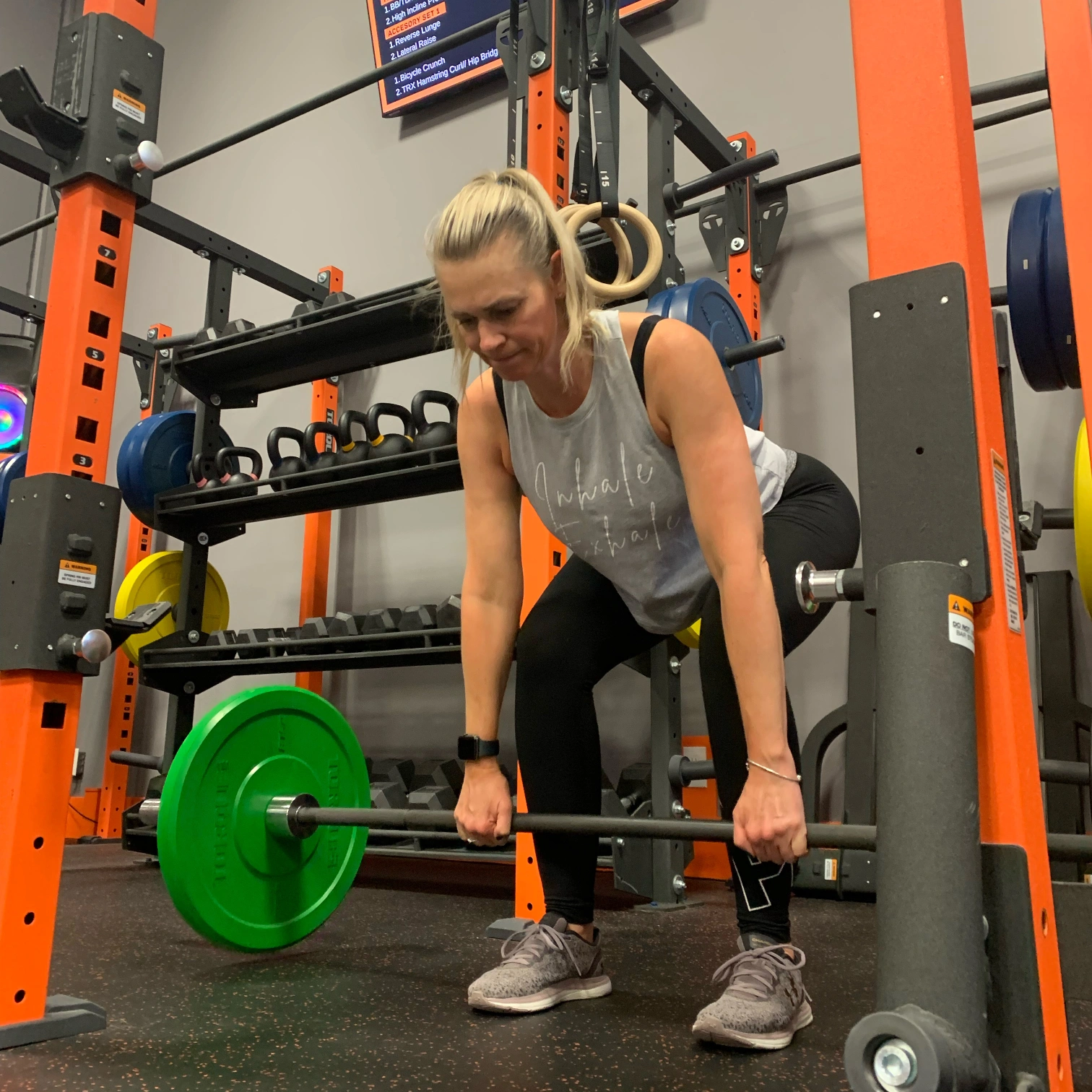
There's also a less exciting reason why free weights have become so heavily associated with functional training facilities, and its because they make a lot of sense from a business perspective. Machines take up a huge amount of floor space and many of them are designed around one primary movement. When you're trying to train multiple people at the same time, a rack, adjustable bench, dumbbells and some open floor space can provide hundreds of different exercise options in the same footprint that one or two machines takes up. That's particularly important in a facility like ours where we need to be able to individualize exercises for several people training at once. So while you will certainly see more free weights than machines at AIM Athletic, that's not because machines somehow make you less athletic. Part of it is simply that I'd like to have enough room left in the gym for everyone to actually work out.
Ultimately, whether we're working with someone in Small Group Personal Training, 1:1 Personal Training, Youth Strength Training or Active Rehab, exercise selection comes down to the person standing in front of us and the adaptation we're trying to create. Someone returning from an injury may benefit from additional external stability while we rebuild their strength. A young athlete may benefit from exercises requiring them to develop more control and coordination. Someone primarily interested in improving their body composition may benefit from exercises that allow them to safely perform more high-quality reps. Even within the same workout, we may use a free-weight exercise when we want someone to create more of their own stability and then deliberately provide more support on another exercise so they can focus on producing more force. Ask some of my 1:1 training clients about our leg press, wall squat sets.
In the end, machines aren't better than free weights and free weights aren't better than machines. They're different tools that allow us to manipulate the demands of an exercise. Good programming isn't about choosing the exercise that looks the most athletic, better on instagram, or checking whether it meets some arbitrary definition of "functional." It's about understanding what quality we're trying to improve, what might be limiting the person performing the exercise and then choosing the tool that allows us to create the best possible training stimulus. Sometimes that's a barbell squat, sometimes it's a leg press, and sometimes it's a combination of both. The important part is understanding why we're using it in the first place.
You've got the info, now it's time to take AIM!

.webp)




.webp)

.png)




.webp)