
When something starts to hurt in the gym, the first assumption most people make is that the joint itself is the problem. Bad knees. Bad shoulders. A tight low back. Maybe even some wear and tear starting to creep in. While that might sound logical, its not always the full story. In most cases, joints are just the area that feels the problem, not where the problem actually starts.
Your body is one big interconnected system and when we think about joint pain, there are two models that worth understanding. The first is the joint by joint model, where certain joints are designed to be mobile and others to be stable. Simply put, when one joint is not doing its job, the joints above or below it are forced to compensate. The second is the idea that the body functions as a biotensegritous structure. While that's a big sciency sounding word, it essentially means that you can think of the body like a spider web. If you pull on one part of the web, tension is redistributed across the entire system, not just where you pull it. The same thing happens in your body. A restriction or weakness in one area does not stay local, it changes how force and tension are managed everywhere else.
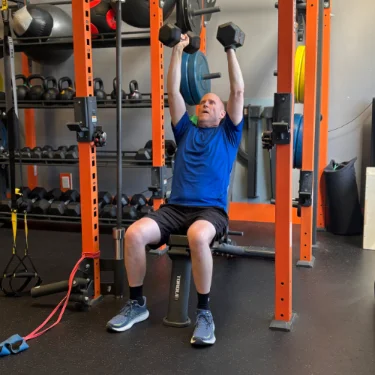
Take the shoulder for example. A lot of shoulder pain I see in the gym, especially with overhead movements, is not actually a shoulder issue, it is instead a scapular control issue. If the shoulder blade is not moving properly along the rib cage, the joint loses its optimal positioning. Now every press, raise, or reach overhead creates unnecessary stress. The shoulder takes the hit, but the root problem is poor control and positioning upstream at the scapula.
The same thing happens at the knee. Most the time this pain is not because the knee is damaged, it is because it is stuck between a hip that is not stabilizing and an ankle that is not moving well. If the hip cannot control rotation or the ankle lacks mobility, the knee becomes the middleman trying to manage forces it was never meant to handle. That is when things start to feel irritated, and can become even more magnified when you do something cyclical like running or cycling.
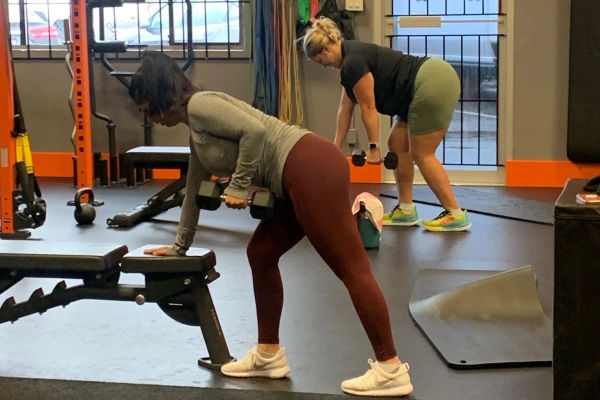
The low back is probably the most common example, and where I see most people struggle. People feel tight or sore in their back and assume the solution is stretching. In reality, the low back is often doing the job of the hips. If you cannot create movement through your hips effectively, your spine will find a way to make it happen. Over time, that repeated compensation leads to stiffness, discomfort, and the feeling that something is off.
This is where the concept of load tolerance becomes important. I'm sure you're sick of hearing it by now if you follow these blogs, but tissues adapt to the stress placed on them, but only if that stress is applied in a way they can handle. If your movement patterns are off, you are not just lifting weight, you are distributing that weight poorly across your body. Even if the load itself is not that heavy, the way it is being handled can exceed what certain tissues are prepared for.
This is also why pain can seem inconsistent. Some days feel fine, other days feel worse, even when doing the same workout. The reality however is that pain is not random. Pain is your body’s way of telling you that the system is operating close to its limit, and small changes in fatigue, stress, or recovery can push it over the edge, in other words the straw that breaks the camel's back.
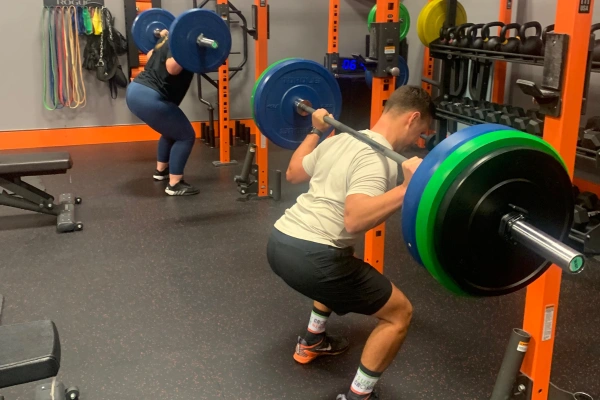
Strength training, when done properly, is one of the most effective tools we have for dealing with joint pain. Stronger muscles improve joint stability, increase load tolerance, and allow forces to be distributed more evenly throughout the body. Over time, this reduces unnecessary stress on any one area and builds resilience and robustness so that joints are not constantly being pushed past what they can handle.
The solution is not to avoid training or to constantly chase temporary relief through stretching and soft tissue work. Those can help, but they do not address the root cause. The real fix is improving how you move and how you load those movements. Better positioning, better control, and better exercise selection go a long way in reducing unnecessary joint stress.
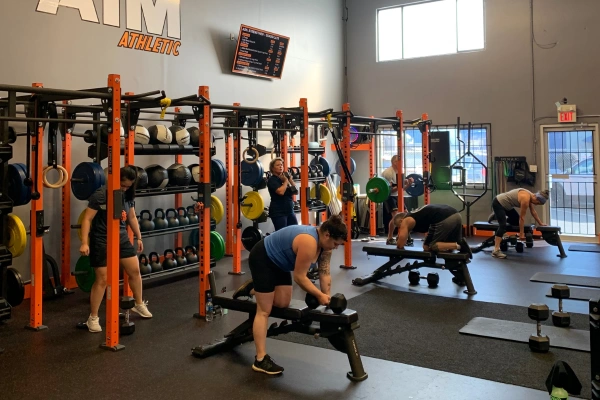
At AIM Athletic, this is exactly how we approach things across our small group personal training, one on one personal training, active rehab, and hockey training programs. When someone tells us they are hurting, we are not just looking at the painful joint, we are looking at how the entire system is working together. A big part of that is using joint repositioning drills, especially through the pelvis and shoulder girdle, to restore proper alignment and control. In active rehab sessions in particular, I often use PRI based exercises to help reposition these areas, improve breathing mechanics, and re-establish better movement patterns. By improving positioning both upstream and downstream from the affected area, we can offload stressed joints and allow them to function the way they are supposed to. It is not about chasing pain, it is about addressing the cause of it.
At the end of the day, if you're in pain, its likely not because your joints are fragile. They are just being asked to deal with more than they should. Clean up the way you move, build strength in the right places, and most of the time, those nagging aches start to fade.
You've got the info now it's time to take AIM,

.webp)




.webp)

.png)




.webp)