
Pre-workout supplements have become such a normal part of going to the gym that some people I know are genuinely concerned they may not be able to perform a squat unless they first consume a fluorescent drink called something like Nuclear Meltdown or John Wick (seriously, look it up on Amazon, it’s there). In all fairness, there is legitimate evidence behind the primary ingredient in most of these products. Caffeine is one of the most consistently effective performance enhancing supplements available and has been shown to improve strength, power, muscular endurance, alertness, and overall workout output. The more interesting angle however, is what happens when caffeine allows you to do considerably more work than you otherwise would have.
A recent study I read looked into that question by examining how caffeine affected eccentric strength during a workout and muscle function afterward. Eccentric contractions occur when a muscle produces force while lengthening, in other words the "down" part of most movements. The researchers found that caffeine helped participants generate greater eccentric torque during the workout, but this was followed by a larger reduction in their ability to produce torque over the next 48 hours. When the eccentric load was kept the same between the caffeine and placebo conditions, that difference disappeared.
This suggests caffeine itself was not directly causing additional muscle damage. Instead, it allowed participants to produce more force and accumulate more eccentric loading during the workout, which likely created more fatigue afterward. Caffeine was less the criminal mastermind and more the training partner gassing you up to do “one more set” for the sixth time.
Caffeine primarily works by reducing the feeling of fatigue and makes exercise feel more doable. It does not magically add energy to the muscles, despite the fact that we have collectively decided to call caffeinated beverages “energy drinks.” By increasing alertness and reducing perceived effort, caffeine may allow you to lift more weight, perform more repetitions, or maintain a higher pace. That can absolutely be beneficial, but a harder workout still comes with a greater cost on recovery.
That is the practical lesson from this research. If caffeine helps you perform more work, you have completed a more demanding workout. That may be useful when the additional work fits the goal of the program and you have enough time to recover. It becomes less useful when every workout turns into the Olympic final of goblet squats and you spend the next two days wondering why your legs have stopped cooperating.
Caffeine can come from coffee, pre-workout powder, caffeine tablets, or energy drinks. Once it reaches your bloodstream, your muscles are not particularly interested in whether it arrived in a black coffee or a can featuring a flaming skull. What matters most is the dose, when you consume it, your individual tolerance, and how it affects your sleep. It is also easy to forget that the morning coffee, afternoon energy drink, pre-workout scoop, and evening coffee all count toward the same daily total. Your nervous system does not keep separate spreadsheets for each beverage.
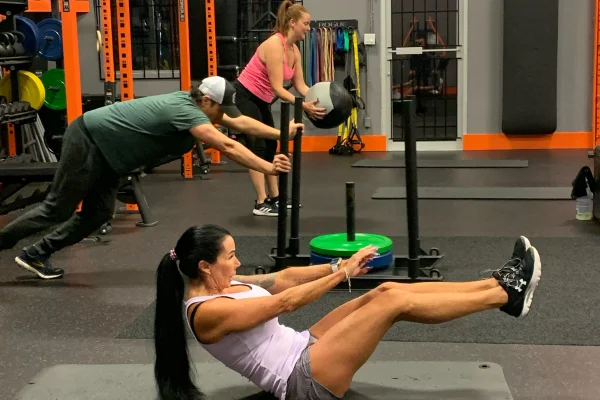
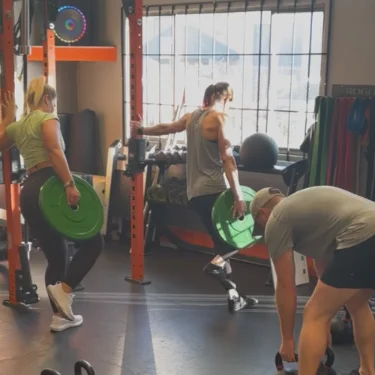
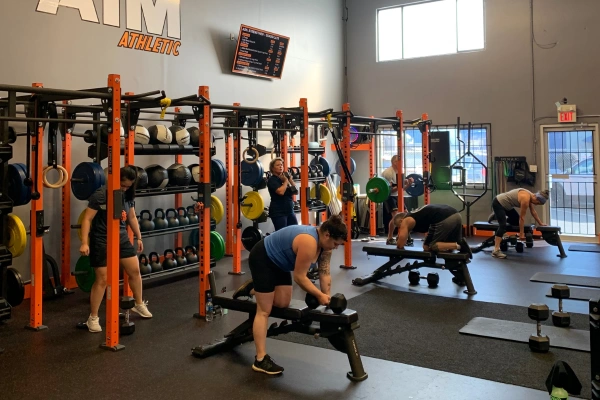
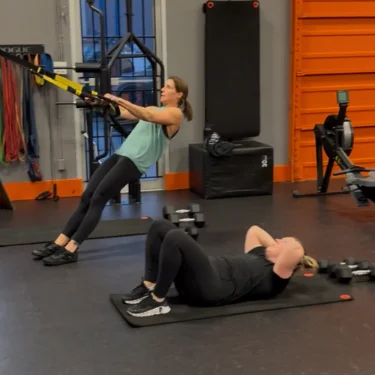
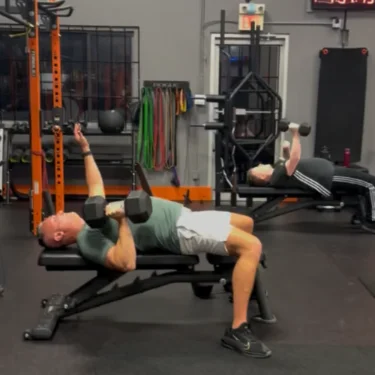
At AIM Athletic, this is where appropriate programming and coaching matter. Caffeine may help someone produce more output during Small Group Personal Training or a one-on-one personal training session, but feeling unusually energetic does not mean we suddenly need to add three sets, and two cardio challenges. The additional output still needs to fit the goal of the workout and the person’s ability to recover from it. For active rehabilitation clients, caffeine should also not be used to bulldoze through pain, neurological symptoms, or movement restrictions. Feeling more awake is obviously not the same thing as suddenly possessing a fully rehabilitated shoulder, back, hip, or knee.
Our younger athletes do not need pre-workout supplements or energy drinks to train effectively. They need adequate sleep, regular meals, hydration, appropriate programming, and good coaching, which is an admittedly less exciting list than Blue Raspberry Annihilation, but a much better foundation for long-term development. Youth Strength Training should improve strength, movement quality, confidence, and athletic ability without requiring kids to arrive chemically prepared to fight a bear.
The takeaway is not that caffeine or pre-workout supplements are inherently bad. Caffeine works, and that is exactly why it should be treated as a tool rather than a personality trait. It can improve workout output, but more output is only useful when it supports the training plan. If it simply encourages you to do far more work than you can recover from, or keeps you awake half the night after an evening session, the benefit quickly becomes questionable. Unfortunately, sleep and sensible programming do not come in a neon container with lightning bolts on the label, but they are both considerably more important.
You've got the info, now it's time to take AIM!

.webp)




.webp)

.png)




.webp)