
If you've been wearing an Apple Watch, Garmin, Whoop, Oura Ring, or just about any other fitness tracker over the last few years, you've probably seen Heart Rate Variability, or HRV, pop up somewhere. It's become one of the most talked about metrics in the wearable world, yet if I asked ten people at AIM Athletic what it actually means, I'd probably get ten different answers, or a lot "I don't knows." Most people know that a higher number is generally considered "good" and a lower number "bad," but very few understand what it's actually measuring or why they should care.
The easiest way I've found to explain HRV is to picture an ECG. Every heartbeat creates a spike on the screen called the QRS complex. HRV isn't measuring the size of those spikes, it's measuring the tiny differences in time between them, specifically the R-R interval from one heartbeat to the next. Most people assume that if their heart rate is 60 beats per minute, their heart beats exactly once every second like a metronome, but that's not how a healthy heart works. One beat might occur after 0.96 seconds, the next after 1.04 seconds, then 0.99 seconds. Those tiny differences are your heart rate variability, and in general, the more variability there is, the healthier and more adaptable your nervous system tends to be.
This is where my mind always goes when I think about HRV. Think about what happens when an ECG flatlines? You die. There isn't any variability left. Now before everyone starts frantically checking their Health App tomorrow morning, I'm obviously exaggerating to make a point. Healthy biological systems are adaptable. They speed up when they need to, slow down when they should, and constantly adjust to what's happening around them. A healthy nervous system should be able to switch from "fight or flight" into "rest and digest" without much of a second thought. Generally speaking, a higher HRV reflects that your parasympathetic nervous system is doing its job well and your body is recovering efficiently. A chronically lower HRV often suggests your body is spending more time in that stressed, sympathetic state.
This is where HRV becomes really useful. Rather than thinking of it as a fitness score, think of it as a recovery score. Every stressor in your life influences it. A tough workout, poor sleep, work deadlines, dehydration, travel, alcohol, getting sick, or even chasing your kids around all weekend can suppress your HRV. Your body doesn't really distinguish between physical stress and mental stress. As far as your nervous system is concerned, a brutal leg workout and a miserable week at work are both withdrawals from the same recovery bank account. If the withdrawals keep outweighing the deposits, HRV usually starts heading in the wrong direction.
Research has consistently shown that when HRV remains lower than your normal baseline for several days, your risk of getting sick or injured begins to increase. That doesn't mean one low reading means you're about to wake up with the flu or tear your ACL during tonight's hockey game. Instead, think of HRV as an early warning light on your dashboard. If it's been trending downward for a week and you're also feeling tired, sore, unmotivated, and everything in the gym suddenly feels heavier than it should, your body is probably asking for a little more recovery.
The funny part is that people are always looking for some secret supplement, cold plunge, breathing gadget, or recovery hack to improve their HRV. In reality, the answer is usually much less exciting, sleep more, eat enough quality food, stay hydrated, and manage stress as best you can. Train consistently instead of trying to turn every workout into the Olympics because you watched one too many motivational videos over the weekend. The basics aren't flashy, but they work, and they work remarkably well.
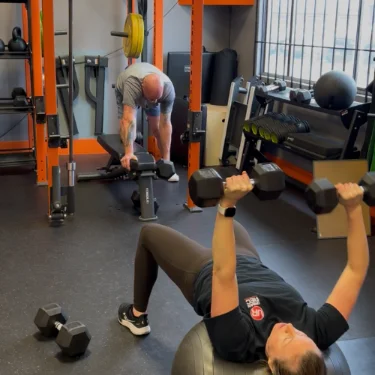
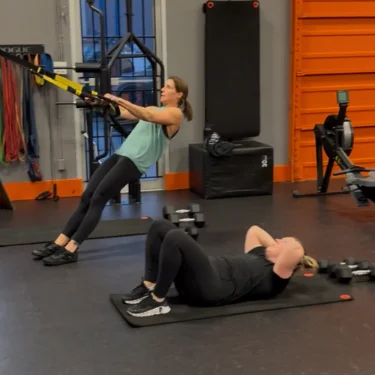
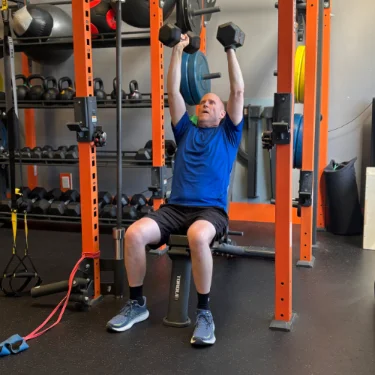
This is actually one of the biggest reasons we coach the way we do at AIM Athletic. Whether you're in our Small Group Personal Training program, working one on one in personal training, attending Hockey Training, or progressing through Active Rehabilitation, we're constantly trying to find that sweet spot. We want to challenge you enough that your body has a reason to adapt, but not so much that you spend the next four days walking around like you've forgotten how stairs work. Recovery isn't something that happens between workouts. Recovery is what allows the workouts to actually make you stronger. That's why we don't just care about how hard you can train today. We care about whether you'll be able to come back tomorrow, next week, and next month feeling healthier, stronger, and continuing to make progress.
So the next time your smartwatch tells you your HRV is a little lower than usual, don't panic and don't automatically skip your workout. Use it as another piece of information. Look at the trend instead of obsessing over one day's number, consider how you're actually feeling, and adjust accordingly. The people who make the most progress in the long run usually aren't the ones who train the hardest every single day. They're the ones who consistently find the balance between challenging themselves and giving their body enough recovery to adapt.
You've got the info, now it's time to take AIM!






.webp)



















.webp)








.png)








.webp)