
A lot of the ideas for these posts come directly from things I see in the gym throughout the week. Sometimes it's a question from a member, sometimes it's a coaching cue that hits home with someone, and sometimes it's watching someone do something really well and realizing there's an even better lesson hiding underneath it.
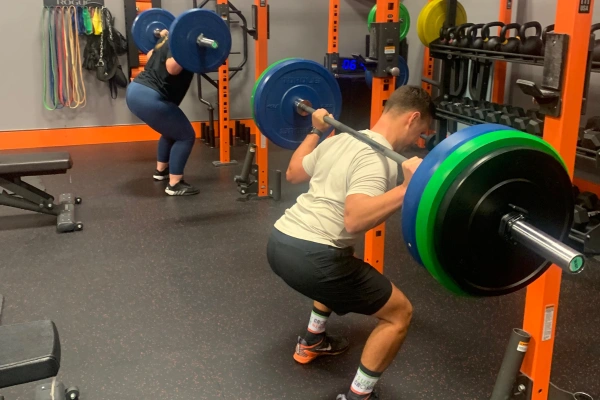
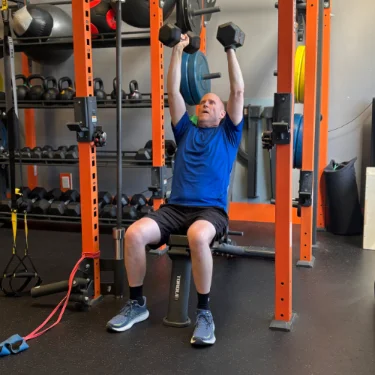
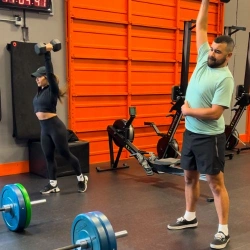
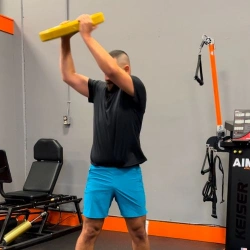
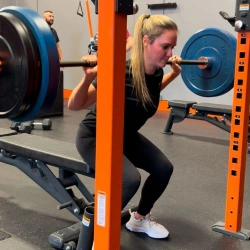
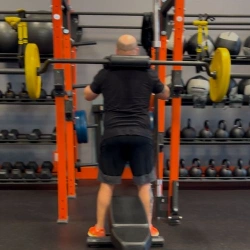
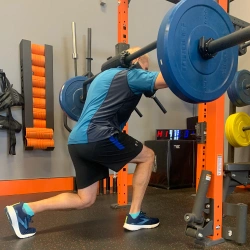
This week, I was watching one of our members perform overhead squats. For anyone unfamiliar with the exercise, an overhead squat is one of the most challenging exercises you can do from a mobility standpoint. It requires excellent shoulder, thoracic spine, hip, and ankle mobility, as well as a core strong enough to keep everything organized while you're squatting.
The reps were good. In fact, they were very good. But watching out of the corner of my eye, I noticed something interesting. As he descended into the squat, his hips were shooting backward instead of dropping toward the floor, and his chest was falling forward. The movement was successful, but it looked harder than it needed to be. My first thought wasn't that he couldn't do it. Instead it was, "This guy can do more than that."
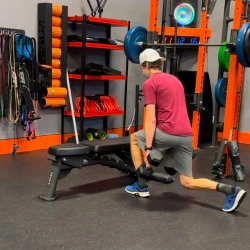
I suggested he try elevating his heels on a small ramp, and after trying a few he looked up and said, "That's the missing piece." The squat felt smoother, more balanced, and easier to control. The interesting part is that I don't actually think his ankle mobility was the problem. I think it was a center of mass problem.
When most people think about mobility limitations, they assume a muscle is tight or short. Sometimes that's true. More often, however, the body is simply running out of available space at a joint to move into. Imagine trying to squeeze into a parking spot that's already full. No amount of stretching is going to create room if there's nowhere left to go.
This is especially common at the ankle. If your center of mass is shifted too far forward, you're already using a large amount of your available ankle dorsiflexion before the squat even starts. When you begin descending, there simply isn't much room left. The body solves the problem and compensates by sending the hips backward and leaning the chest forward to stay balanced. Technically, you completed the squat. Efficiently? That's another story.
Many people who live with a forward center of mass tend to present with a familiar posture, hips tipped forward, an exaggerated arch in the low back, ribs flared, and shoulders or head drifting forward (aka anterior pelvic tilt). The body becomes very good at balancing in this position, but it often comes at the cost of movement options.
By elevating the heels during the squat, we effectively changed the starting position of the foot and ankle. This allowed our member to sit down into the squat rather than back into it. The hips could stay underneath the ribs, the chest stayed more upright, and suddenly the movement looked stronger despite no actual mobility changes occurring.
This isn't just a squat thing, either. Here's a quick experiment to try the next time you're in the gym. Stand with your heels, glutes, upper back, and head against a wall. Now try to perform a hip hinge. Good luck. Most people immediately feel trapped, and all you can do really is round your back. Next, take two steps forward away from the wall and try again. Suddenly hinging feels easy because you now have room to push your hips backward. Nothing changed about your hamstring flexibility in those ten seconds. The only thing that changed was where your center of mass was positioned.
When exercising, the body is constantly solving balance equations. Every rep you perform is really just a negotiation between your muscles, your joints, and gravity. If your center of mass isn't where it needs to be, your body will find a workaround. Sometimes that's harmless. Sometimes it limits performance. Sometimes it creates unnecessary stress on areas that were never intended to do all the work.
This is a huge part of what we look at in our Small Group Training, Personal Training, Active Rehab, and Hockey Training programs at AIM Athletic. Often the solution isn't more stretching, more mobility drills, or another fancy corrective exercise from social media. Sometimes it's simply helping someone find a better position so their body can access the mobility and strength they already have.
The best athletes in the world aren't just strong and mobile. They're incredibly good at controlling where their center of mass is during movement. Whether it's a hockey player changing direction at full speed, a rehab client learning to move without pain, or a member trying to hit a deeper squat, the same principle applies. Control your center of mass, and movement becomes easier. Ignore it, and you'll spend a lot of energy fighting gravity instead of working with it, and let's be honest, gravity is undefeated. You might as well get it on your team.
You've got the info, now it's time to take AIM!

.webp)



.webp)

.png)




.webp)