.webp)

I call four or five parents almost every day who have reached out about our Youth Strength Training program, and despite how much the field of strength and conditioning has changed, I still hear some version of the same question “Is it actually safe for kids to lift weights? I heard it can stunt their growth.” It is one of those fitness myths that has managed to hang around for decades, right alongside “squats are bad for your knees” and the idea that doing 500 crunches is eventually going to uncover your abs.
The concern isn’t completely made up. A long time ago, researchers and medical professionals were understandably cautious about exposing developing bones and growth plates to heavy loads. Case reports described growth-plate injuries in children and adolescents who were lifting weights. The important part that gets missed when the story gets retold however, is that many of these injuries involved things like poor lifting technique, maximal loads, and a lack of qualified supervision. Somehow, “kids probably shouldn’t attempt poorly supervised maximal lifts” eventually became “lifting weights stunts your growth.” For those of you at home, these two very different statements. In fact, the vast majority of research has not show any increase in growth-plate injuries from appropriately designed youth strength training programs.
Fortunately today, the position of the major strength and conditioning organizations is much more positive. The National Strength and Conditioning Association states that appropriately designed and supervised resistance training is safe for youth and can improve strength, power, motor performance and resistance to sport-related injury. The International Olympic Committee goes even further in its statement on youth athletic development, specifically encouraging young athletes to participate regularly in varied strength and conditioning programs that are age-appropriate, technique-driven, safe and enjoyable.
There is also a strange disconnect in how we think about risk. Parents are perfectly comfortable putting a 10 year old on skates, sending them onto the ice at full speed and allowing another 10 year old to chase them into the boards. Soccer players sprint, cut, collide and land awkwardly. Basketball players jump and land dozens of times. But hand that same kid a 15-pound dumbbell in a controlled environment and suddenly we're worried that we are going to compress him down to 5'4. Resistance training and weightlifting have actually demonstrated very low injury rates compared with many popular youth sports when they are properly coached.
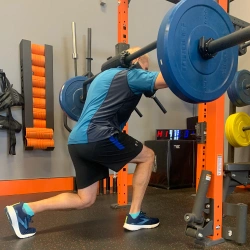
Of course, saying strength training is safe for kids does not mean we load 225 pounds onto a barbell, drop it on a 10 year old’s neck and yell, “Three reps, let's go! No pain, no gain!” The entire argument depends on the words appropriately designed and supervised. The key thing to understand is that kids are not miniature adults. They don't need a bodybuilding program with smaller dumbbells. They do not need the same exercises, the same training volumes or even have the same goals. A good youth strength program should reflect not just the child’s age, but also maturity, training experience, coordination and ability to follow instruction. Two 13 year olds can be at dramatically different stages of physical development, which is why age alone is a pretty lousy programming tool.
This is where the concept of the Long-Term Athletic Development Model becomes important. The LTAD model looks at athletic development as something that occurs over years rather than trying to turn a 10-year-old into a finished athlete by next Sunday. Early in development, the emphasis should be on physical literacy, this means learning how to squat, hinge, push, pull, brace, run, jump, land, throw and change direction. As athletes mature, training can progressively place greater emphasis on strength, power, speed and more specific physical qualities. The NSCA’s LTAD model specifically recognizes that children and adolescents are physiologically and psychologically different from adults and that training should evolve with growth, maturation and individual development.
What makes youth strength training particularly interesting is that kids can get substantially stronger without necessarily getting much bigger. Research in children has commonly reported strength improvements in the range of roughly 13–30% following resistance-training programs. Before puberty, however, those improvements appear to occur with relatively little muscle hypertrophy. Younger athletes simply do not yet have the same hormonal environment as teenagers and adults to support large increases in muscle cross-sectional area. Instead, a substantial portion of their early strength development appears to come from neurological adaptations like learning to recruit muscle more effectively, improving coordination between muscles and becoming more skilled at the movements they are performing.
In simpler terms, their muscles aren't necessarily getting dramatically bigger, its their nervous system that is getting better at using what they already have. That distinction is important because it changes how we should train them. If skill and coordination are major drivers of improvement, youth athletes need exposure and repetition. Lots of good-quality reps. They need enough practice that squatting, landing, accelerating and controlling their body become skills rather than something they have to consciously solve every repetition. This is also why constantly changing exercises just to keep kids “entertained” can be counterproductive. Training should absolutely be fun, but fun and random are not the same thing.
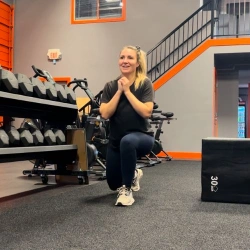
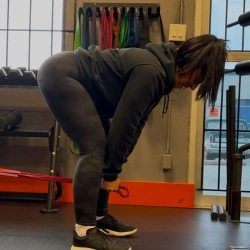
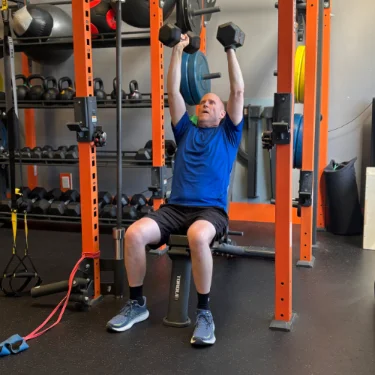
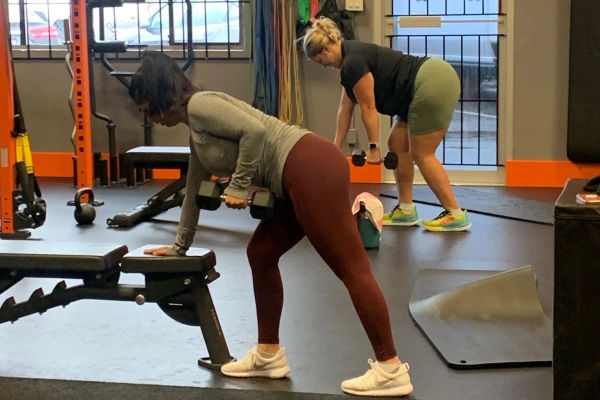
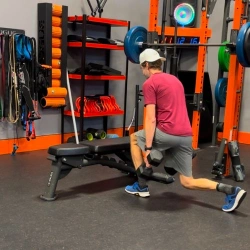
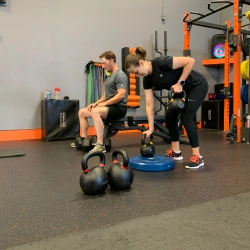
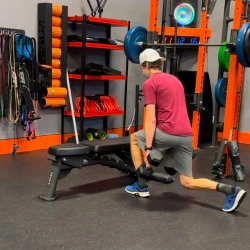
One method I like for younger or less experienced athletes is the 1x20 method which can include a relatively large variety of movements performed for one set of higher repetitions with manageable resistance. The goal isn't to annihilate a muscle group, instead it is to accumulate practice across a broad range of movements without creating excessive fatigue. Circuit-style training can accomplish something similar. A young athlete might move between a squat variation, row, push-up, hinge, carry and core exercise while learning technique and developing general work capacity. As competency improves, we can gradually introduce heavier loads, lower repetition ranges and more complex movements. Progression should be earned through movement quality, not because someone had a birthday and is now apparently ready for a max deadlift.
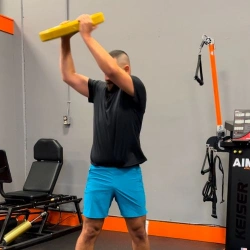
Strength is also only one piece of the puzzle. Speed and agility should be trained throughout youth development, and this is another area where quality matters more than simply making kids tired. Sprinting is a skill. Accelerating, decelerating and changing direction are skills. We want our young athletes at AIM practicing those movements while they are relatively fresh so they can actually move quickly and learn good mechanics. Ten perfect 10-metre accelerations with full recovery will generally teach an athlete more about speed than 30 minutes of running around cones until they look like they have forgotten how to use their legs. Conditioning has its place, but fatigue and speed development are not the same thing.
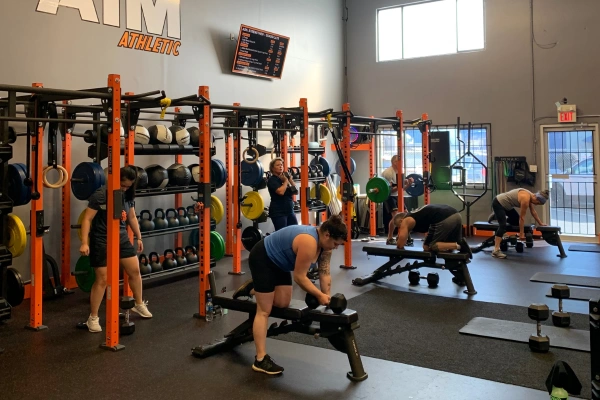
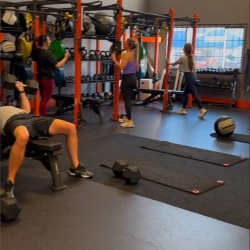
This philosophy really isn't exclusive to our Youth Strength Training program either. The same principle drives how we approach Small Group Training, Personal Training and even Active Rehab at AIM Athletic. Training should meet the person where they are and progress from there. The exercises, loads and goals obviously change depending on whether we are working with a 10 year old hockey player, a 45 year old trying to get stronger or someone rebuilding capacity after an injury, but the underlying process is pretty similar. Assess what the person can currently do, teach them to do it well, expose them to an appropriate training stimulus and progressively increase the challenge as their capacity improves.
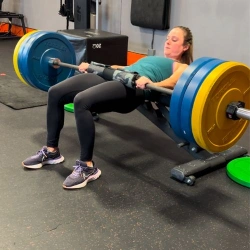
The biggest mistake we can make with youth strength training is viewing it exclusively through the lens of adult strength training. The goal is not to see how much weight we can get onto the bar as quickly as possible. The goal is to build an athletic foundation that gives kids more options later on. We want stronger bones and connective tissues, better coordination, more strength and power, improved sprinting and landing mechanics, and enough confidence in the gym that physical activity becomes something they understand rather than something intimidating.
You've got the info, now it's time to take AIM!





.webp)

.png)




.webp)